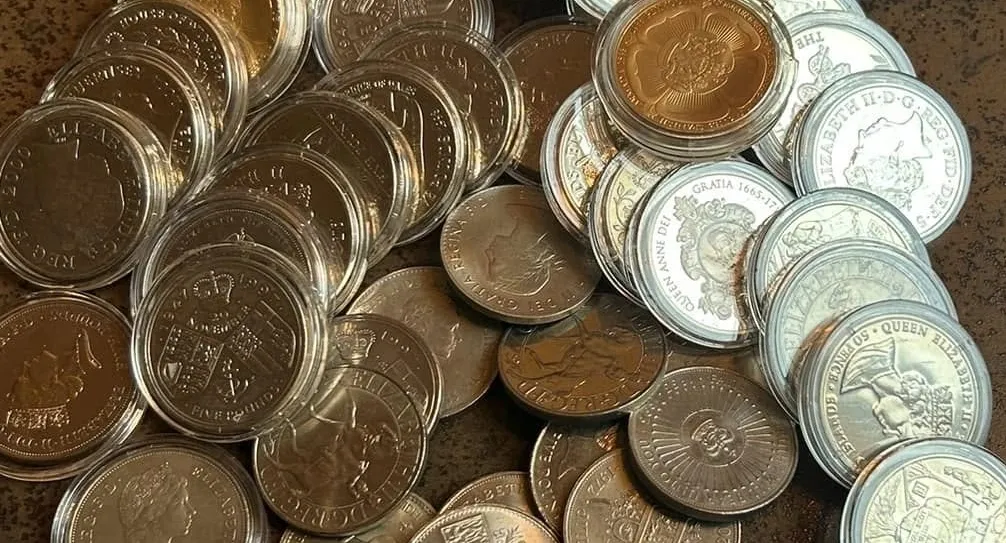
In the world of numismatics, even the smallest details can have a significant impact on the value of a coin. Among the various factors that affect a coin’s appeal and market value, abrasion is a crucial aspect that collectors and investors must understand.
Abrasion refers to the light wear and tear on the surface of coins, which typically occurs through handling, contact with other coins, or environmental factors.
What is Abrasion?
Abrasion on coins manifests as light rubbing or scuffing that affects the coin’s surface. This kind of wear is generally superficial and does not involve deep scratches or gouges, which can be caused by harsher impacts. Unlike specific forms of damage like nicks or deep scratches, abrasion does not alter the fundamental features of the coin but does affect its overall luster and texture.
The typical causes of abrasion include coins jostling against each other in bags during transport, frequent handling by collectors and dealers, and contact with surfaces or materials that rub against the coin. Such interactions result in a slightly dulled surface, where the original mint luster might be diminished, particularly on the high points of the coin’s design.
Differentiating Abrasion from Other Forms of Wear
It is important to distinguish abrasion from other types of wear such as hairlines, bag marks, or scratches. Hairlines are fine, shallow scratches caused primarily by improper cleaning techniques, often visible under magnification and running in a uniform direction. Bag marks are nicks and dings that occur when coins collide with each other in mint bags. In contrast, abrasion does not typically produce distinct lines or marks but results in a general loss of sheen over large areas of the coin’s surface.
Does Abrasion Affect Coin Value?
The value of a coin is influenced by several factors, including rarity, demand, historical significance, and condition. The condition, or grade of a coin, plays a pivotal role in determining its market value. Abrasions, depending on their severity, can significantly detract from the coin’s grade. In the nuanced grading systems used by professional services, the presence of abrasion can lower a coin’s grade because it impacts the aesthetic and original mint condition.
For coins intended as circulating currency (business strikes), buyers may be slightly more forgiving of minor abrasions as these coins are expected to have some degree of wear. However, for collector coins, especially those classified as proof or uncirculated, any sign of abrasion can drastically reduce their appeal to collectors, thereby decreasing their market value. Collectors prize the original condition and luster of such coins, and any compromise to their integrity, such as abrasion, is viewed unfavorably.
Collectors looking to preserve the worth of their numismatic investments should handle coins carefully and store them properly to minimize the risk of abrasion and other forms of wear. Understanding and identifying abrasion is a vital skill in numismatics, helping collectors make informed decisions about their collections.